|
OUR SITE USES FRAMES TO ACHIEVE A NOSTALGIC LOOK – IF
YOU CANNOT SEE A MENU TO THE LEFT OF THIS PAGE, PLEASE CLICK ON THE ‘HOME’
BUTTON ABOVE
|


|
Image © Martins Bank Archive Collections |
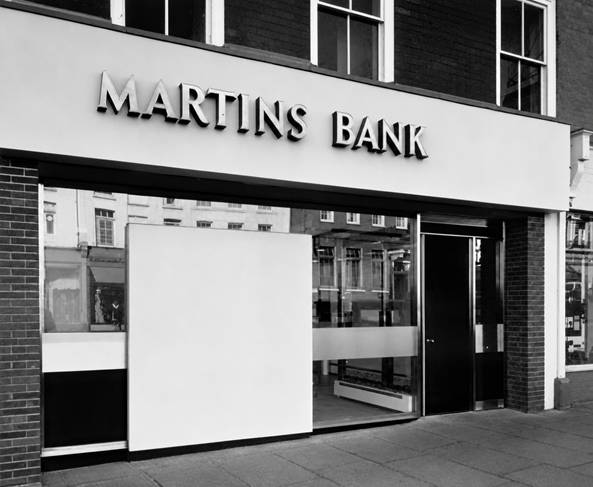
In Service: 4 November 1965 until 15 November 1982
Image © Martins Bank Archive Collections
Things will
be better for Martins in its Northern heartlands, with many Barclays Branches
closing in favour of bigger or more modern Martins outlets. In the Midlands and the South, Martins has
opened branches in towns and cities where it has been in direct competition
with its new owners. Ashford is lucky enough to survive for thirteen years
after the Merger. |
||||||||||||||||||||||||||||||||||||||||||||
|
For our feature, we visit Ashford Branch not long
after it was first opened, and the Winter 1965 edition of Martins Bank
Magazine shows us round.
but the valley
sheep are fatter; we therefore
deemed it meeter to carry off the latter”… ( T L Peacock )
|
|||||||||||||||||||||||||||||||||||||||||||||
|
|
|
||||||||||||||||||||||||||||||||||||||||||||
|
That little jingle
may explain why the man at our hotel had been coming to Ashford once a week
from July to November for thirty years to buy sheep. Having bought these
products of Kent's rich fields and the Romney Marsh he resold them throughout
the West Country and even in the Midlands. On November 5, the day we called
at our new branch, the last sheep sale was being held at the market but our friend thought he'd buy very few because
too many people would be after them.
Just as Ashford market provided a lively interest for sheep buyers, our new
office was a source of interest to people in High Street. We had opened the
day before and on the morning of our visit, more new
customers arrived. Many people stopped to peer in
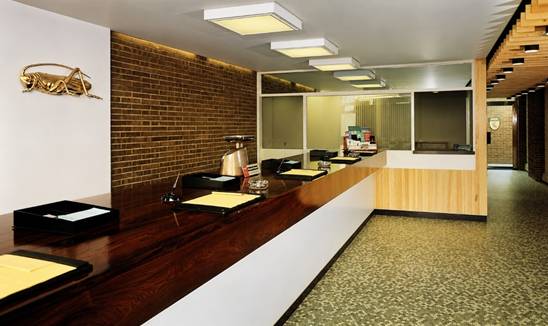
and their comments were invariably favourable. The
branch has tremendous depth. Behind the screen is
a working space, an interview room, manager’s room,
vast machine room, strong room and behind that a
car park. Upstairs are storerooms and staff rooms.
He is a terror for punishment and within
three days opened the new branch, coped with us and a hundred
other problems, and moved house. Mr P. J. G. Cleary, a native of Galway who
studied medicine for three years before deciding it was not for him, is
probably the only man to enter the service by getting
off a bus, going into a post office and with a post office pen replying to an
advertisement while on holiday in England in 1951. During his spell at
Dartford branch he founded the Dartford Irish Club which became the third
largest in England and, though it nearly killed him, we
predict that something similar will occur in Ashford because we saw it
beginning to work at the counter. Good-humoured friendliness, a willingness
to be of help and an unmistakable trace of an accent
made quite an impression Mr M. Cavender with two years'
service at Rochester and a twinkle in his eye, is the third man
on the staff. Mrs P. M. O. Loughlin is an experienced
shorthand typist who, though she joined the
Bank only a few weeks earlier, hopes soon to add
cashiering to her repertoire. Ashford has great
possibilities. Like Canterbury it has a wide hinterland and though industry to the
west will counteract the closing
of the railway workshops the country
town atmosphere predominates.
|
|||||||||||||||||||||||||||||||||||||||||||||
|
We saw no bowlers
and few umbrellas in the main street but plenty of sticks, caps and duffle
coats. One man in a duffle coat said “I reckon in twelve months a Friesian
with calf at foot'll cost you £180”. His companion was willing to pay up to £65 for 'good bullin' 'eifers' if he
could get them. It
seemed that a lot of money was going to change hands in Ashford and we think the new branch
will see quite a lot of it…
Being a bank manager in the 1960s
doesn’t simply mean sitting behind a desk.
Being - and actively
demonstrating that you ARE - a pillar of the community is almost expected of you. Hiding in your “man-cave” is not an option,
and many of Martins’ managers end up involved in some capacity with the work
of local schools, hospitals and charities, to organisations such as the
RSPCA, the local chamber of commerce, Rotary, Round Table, and even the
Freemasons.
This is, of course, all in a
day’s work then for Mr Ford, who has been managing the new branch for less than
three years when he rolls up his sleeves and mucks in for charity as
president of the local Lions Club.
Pictured at the inaugural dinner of the
Ashford Lions Club, the president, Mr. J. S. Ford (Manager, Ashford Branch)
receives the Lions Club Charter.
Seated is Mrs Ford. |
Image © Martins Bank Archive
Collections |
||||||||||||||||||||||||||||||||||||||||||||
|
Getting the message out there… The two advertisements for the opening of
Ashford Branch featured on this page, are vitally important for Martins to be
able to get its message across. Even
as late as 1965, banks are, by “gentleman’s agreement” still not permitted to
advertise individually on television. Newspapers and magazines must,
therefore, remain the main method of communication between a bank and its
prospective customers… |
|||||||||||||||||||||||||||||||||||||||||||||
|
|
|||||||||||||||||||||||||||||||||||||||||||||
|
Intellectual Property Rights © Martins Bank Archive
Collections 1988 to date.
|
|||||||||||||||||||||||||||||||||||||||||||||